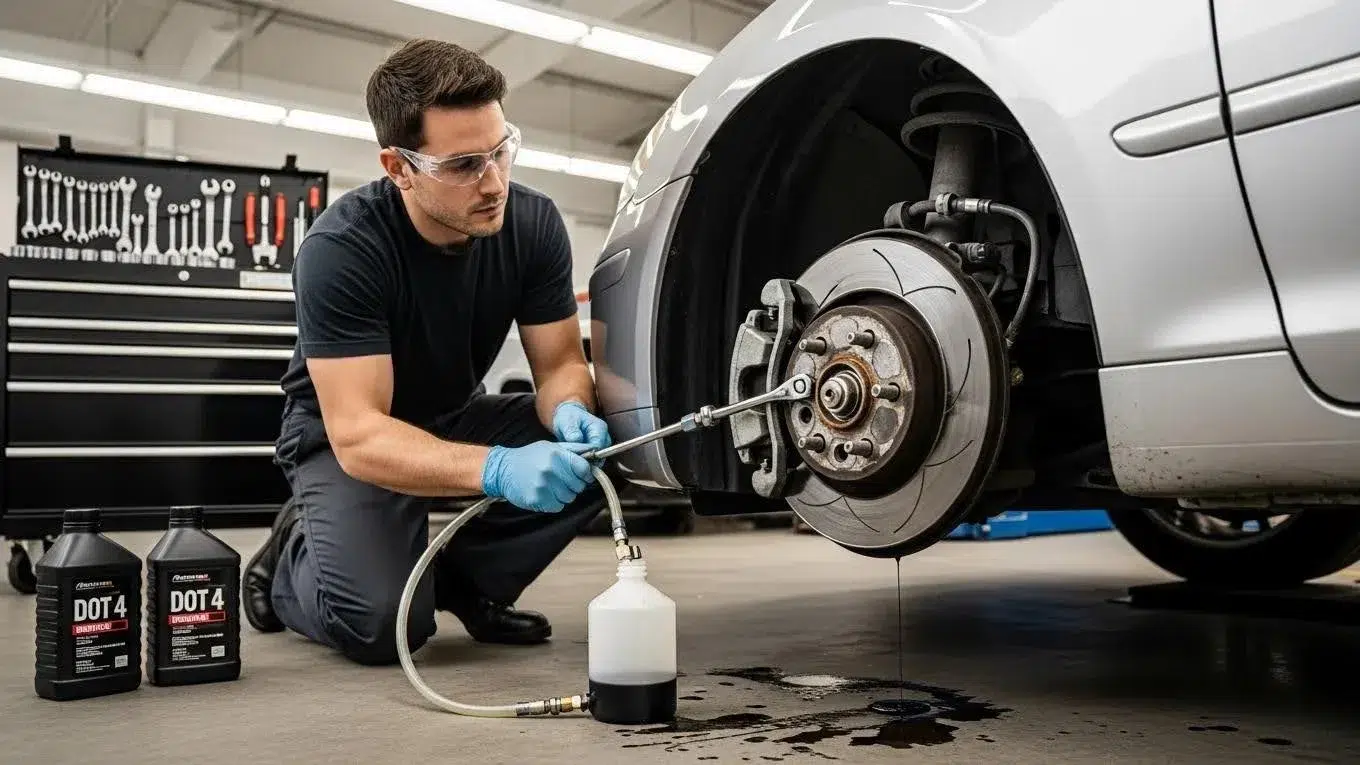
Brake fluid is easy to forget, but it plays a major role in how safely your car stops. Over time, it can absorb moisture, lose effectiveness, and make your brakes feel soft or less responsive. If ignored, contaminated brake fluid can lead to longer stopping distances, corrosion inside the braking system, and serious safety risks.
Regular brake fluid checks and timely replacement help keep your braking system reliable, especially during heavy traffic, towing, or frequent stop-start driving. Here’s what drivers should know about brake fluid changes, warning signs, fluid types, and booking a service at AVS Sittingbourne.
Why Is Changing Brake Fluid Crucial for Vehicle Safety?
Brake fluid plays a vital role in transferring the force from your brake pedal to the brake components, enabling your vehicle to stop safely. Over time, brake fluid absorbs moisture, which lowers its boiling point and increases the risk of brake fade or failure.
Regular brake fluid changes preserve hydraulic pressure and consistent stopping power, minimising the risk of vapour formation under hard braking and maintaining a firm pedal feel.
How Brake Fluid Affects Your Brake System’s Performance
Brake fluid transmits the pedal force to calipers and drums, ensuring effective braking. When brake fluid degrades or becomes contaminated with moisture, its efficiency decreases, which can increase stopping distances and accelerate wear on brake components.
Using clean, manufacturer-specified brake fluid helps maintain consistent brake performance and responsiveness.
Risks of Neglecting Brake Fluid Replacement
Failing to replace brake fluid can lead to several serious issues:
- Longer Stopping Distances: Contaminated fluid reduces braking efficiency.
- Corrosion: Moisture causes internal rust in brake lines and components.
- Brake Failure: In extreme cases, neglected fluid can contribute to complete brake system failure.
How to Recognise Signs That Your Brake Fluid Needs Changing
Early recognition of brake fluid issues helps prevent costly repairs and safety hazards. Watch for these signs:
- Dark or Contaminated Fluid: Murky or dark fluid in the reservoir indicates contamination.
- Spongy Brake Pedal: A soft or spongy pedal feel often signals degraded fluid or air in the system.
- Brake Warning Lights: Dashboard alerts may indicate low fluid levels or fluid condition problems.
Common Symptoms of Degraded or Contaminated Brake Fluid
Common symptoms include:
- Increased Pedal Travel: The brake pedal moves further before the brakes engage.
- Warning Lights: Dashboard indicators alert you to fluid condition or level issues.
- Colour Change: Dark, cloudy, or dirty fluid signals the need for replacement.
Addressing these symptoms promptly ensures your brakes remain effective and safe.
When Should You Schedule a Brake Fluid Check or Replacement
As a general guideline, schedule a brake fluid change every two years or every 24,000 miles, whichever comes first. If you frequently drive in severe conditions such as stop-start traffic, towing, or hilly terrain, consider more frequent checks. Regular inspections help maintain system reliability and safety.
What Types of Brake Fluid Are There and How Do You Choose the Right One?
Common brake fluids include DOT 3, DOT 4, and DOT 5. They differ in chemical composition and boiling points. Always use the type specified by your vehicle manufacturer to ensure optimal performance and safety. If unsure, consult your owner’s manual or a technician at AVS.
Differences Between DOT 3, DOT 4, and DOT 5 Brake Fluids
- DOT 3: Typically used in older vehicles; has a lower boiling point.
- DOT 4: Common in modern cars; offers a higher boiling point for better performance.
- DOT 5: Silicone-based and not compatible with other types; highly resistant to moisture but requires specific system use.
Choosing the correct fluid type is essential for maintaining brake system safety and function.
How Does Brake Fluid Compatibility Impact Safety and Maintenance?
Mixing incompatible brake fluids can damage seals, degrade performance, and compromise safety. Always adhere to the vehicle manufacturer’s specifications to avoid chemical conflicts and ensure the longevity of your brake system.
How Can You Book a Brake Fluid Service at AVS Sittingbourne?
At AVS, brake service costs vary by vehicle and the work required. Contact the garage for a quote. To book an appointment, call 01795 422040. Our team offers transparent pricing and reliable service so you know exactly what to expect.
Factors that Influence the Price of Brake Fluid Replacement
Several factors affect the cost of brake fluid replacement:
- Fluid Type: Higher-spec fluids may cost more but offer better performance.
- Workshop Rates: Labour and service charges vary between providers.
- Additional Repairs: Extra brake system repairs can increase the total cost.
Understanding these factors helps you budget effectively and choose the right service for your needs.
All Vehicle Services: Your Local Garage in Sittingbourne
At All Vehicle Services, we are committed to providing comprehensive vehicle maintenance and repair solutions, with a strong focus on safety and reliability. We understand the critical role that brake fluid plays in your vehicle’s braking system.
At AVS, brake health checks can include brake fluid level checks. Our experienced technicians check the braking system and can advise on the correct fluid for your vehicle
We offer a range of services, including brake pad and disc replacement, free brake health checks, and wider vehicle repairs to keep your vehicle safe on the road.
At All Vehicle Services, we pride ourselves on transparent pricing, professional service, and customer satisfaction. Whether you need a brake check or advice about brake fluid, we are here to help you maintain your vehicle’s safety and performance.
Frequently Asked Questions
What is the recommended frequency for checking brake fluid levels?
It is advisable to check your brake fluid levels at least once a month, especially if you drive frequently or in challenging conditions. Regular checks can help identify any leaks or contamination early, ensuring your braking system remains effective. Additionally, consider scheduling a full brake fluid change every two years or every 24,000 miles, whichever comes first, to maintain optimal performance and safety.
Can I change my brake fluid myself, or should I seek professional help?
While changing brake fluid can be a DIY task for those with mechanical knowledge, it is often best to seek professional help. A qualified technician can ensure the job is done correctly, including proper bleeding of the brake lines to remove air bubbles. This is crucial for maintaining brake performance and safety. If you’re unsure, it’s always safer to consult a professional service like AVS.
What are the environmental impacts of disposing of brake fluid?
Brake fluid is considered hazardous waste due to its chemical composition, which can be harmful to the environment if not disposed of properly. It can contaminate soil and water sources. Therefore, it is essential to take used brake fluid to a certified disposal facility or have it handled by a professional service that follows environmental regulations. This ensures safe disposal and protects the environment.
How can I tell if my brake fluid is contaminated?
Contaminated brake fluid often appears dark, murky, or cloudy, indicating moisture absorption or debris. Additionally, if you notice a spongy brake pedal or a decrease in braking performance, these could be signs of degraded fluid. Regular visual inspections of the fluid in the reservoir can help you catch contamination early, allowing for timely replacement and maintaining brake system efficiency.