
Engine Management Light Diagnosis in Sittingbourne
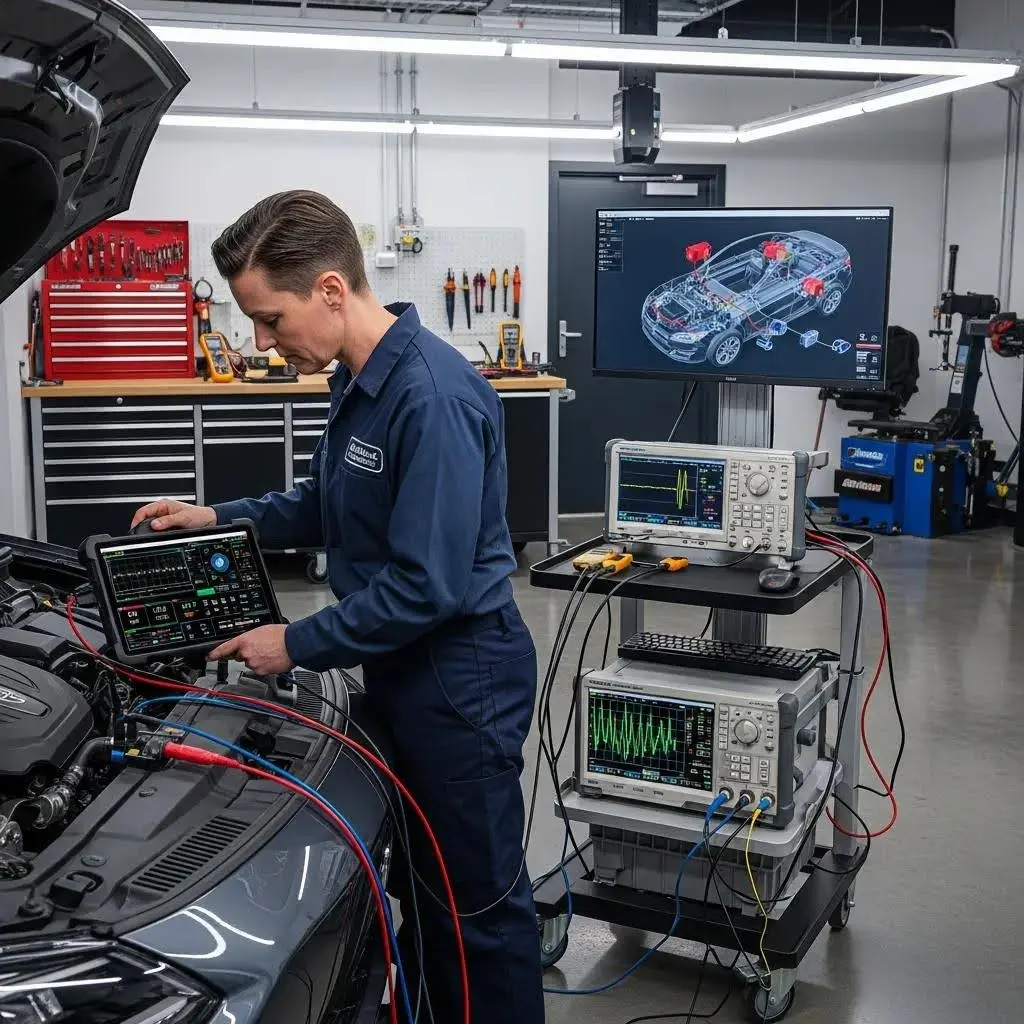
An illuminated engine management light can mean anything from a minor sensor fault to a problem that needs urgent attention. At All Vehicle Services in Sittingbourne, we use modern Snap-on diagnostic equipment to read fault codes, examine live engine data and test suspected components where necessary. We will explain our findings for your vehicle and provide a quote before any repair begins.
- 4.8 out of 5 from 210 Google reviews
- DVSA authorised MOT test station S001858
- RAC approved garage
- 12-month / 12,000-mile warranty on parts and labour
- No additional repairs without your approval
4.8 out of 5 from 210 Google reviews
DVSA authorised test station S001858
RAC approved · 12-month / 12,000-mile warranty on parts and labour
Get a price for your car
Get a FREE quote today! Put your registration in and get a no-obligation quote
Find Out Why Your Engine Warning Light Is On
At All Vehicle Services in Sittingbourne, we use modern Snap-on diagnostic equipment to read fault codes, examine live engine data and test suspected components where necessary. We will explain our findings for your vehicle and provide a quote before any repair begins.
Call 01795 422040 to arrange an initial check.
What Does the Engine Management Light Mean?
The engine management light, also called the check engine light or EML, is connected to your vehicle's engine management and emissions systems. It illuminates when the vehicle detects a fault or an operating condition that requires attention.
Possible causes include a faulty sensor, ignition misfire, air leak, fuel system problem or emissions control fault. The warning alone cannot tell you which component has failed.
That is why reading a fault code is only the first step. A code identifies the system, circuit or condition involved, but further testing may be needed to establish the actual cause.
- A steady amber engine warning light can indicate a fault that needs prompt investigation.
- A flashing engine warning light can indicate an active misfire that risks damaging the catalytic converter.
- The light can go out while a stored or intermittent fault remains in the vehicle's memory.
- Other warning lights, particularly oil pressure or engine temperature warnings, may require you to stop the engine as soon as it is safe.
Do not continue driving if the engine is overheating, oil pressure is low, the vehicle is running severely or a warning indicates an immediate risk.

What Should You Do When the Engine Management Light Comes On?
Your next step depends on how the warning light behaves and whether the car is showing other symptoms.
The light is steady amber
If the car appears to be running normally, a steady amber light does not always mean you must stop immediately. However, you should arrange a diagnostic check promptly and avoid heavy acceleration or unnecessary long journeys until the fault has been assessed.
If the engine starts running roughly, loses power or develops other symptoms, stop when safe and seek advice.
The light is flashing
A flashing engine management light can indicate an active engine misfire. Continued driving may damage the catalytic converter and potentially cause further problems.
Reduce engine load and stop as soon as it is safe to do so. If the light continues flashing, the engine runs roughly or power drops significantly, arrange recovery rather than continuing the journey.
The light appears with reduced engine power
Your vehicle may have entered a reduced-power mode, sometimes called limp mode. This can happen when the engine control system detects a fault that requires protective action.
Do not assume the car is safe for a long journey simply because it still moves. Call us on 01795 422040 to discuss the symptoms and the appropriate next step.
The light has gone out
The fault may have stopped occurring temporarily, but that does not necessarily mean it has been resolved. Stored and pending fault codes may still provide useful information.
Tell us when the light appeared, how long it stayed on and whether you noticed any changes in the way the car drove.
Common Causes of an Engine Management Light
Several faults can trigger the same warning light. These are some of the systems we may investigate during diagnosis.
Oxygen sensor faults
Oxygen sensors monitor the exhaust gases and help the engine management system regulate the fuel mixture. A faulty sensor, wiring problem or related engine fault can trigger a warning light.
Testing helps establish whether the sensor itself is faulty or another problem is affecting its readings.
Ignition coils and spark plugs
On petrol engines, worn spark plugs or failing ignition coils can cause misfires, rough running, poor performance and increased emissions.
If the engine warning light flashes alongside these symptoms, stop driving when safe and seek advice promptly.
EGR valve problems
The exhaust gas recirculation (EGR) system helps control emissions. Carbon deposits, a sticking valve or an electrical fault can interfere with its operation.
Symptoms may include rough idling, reduced performance or an engine warning light, particularly on some diesel vehicles.
Catalytic converter faults
The catalytic converter reduces harmful exhaust emissions. A fault code indicating low catalyst efficiency does not automatically mean the converter needs replacing.
An underlying misfire, exhaust leak, sensor problem or other fault may be responsible. We investigate the available evidence before recommending a repair.
Diesel particulate filter problems
The diesel particulate filter (DPF) captures soot from diesel exhaust gases. Repeated short journeys and interrupted regeneration can contribute to soot accumulation.
Diagnosis may involve checking the filter's condition, pressure sensors and other related systems before deciding whether regeneration, repair or another course of action is appropriate.
Mass airflow sensor faults
The mass airflow sensor measures the air entering the engine. Incorrect readings can affect fuelling and engine performance.
We assess the sensor readings and related intake components rather than assuming the sensor must be replaced.
Fuel system problems
Fuel delivery issues, injector faults and related pressure problems can cause misfires, poor starting or abnormal fuel mixture readings.
The appropriate tests depend on the fault codes and symptoms recorded by the vehicle.
Air leaks and damaged hoses
A split intake hose, leaking connection or vacuum leak can allow air into the engine that the management system has not measured correctly.
These faults may cause rough idling, mixture-related codes or reduced performance.
Coolant temperature sensor faults
The engine management system uses coolant temperature information to control aspects of engine operation. An incorrect reading can affect fuelling and other functions.
We check the relevant readings and components to establish whether the sensor or another part of the cooling system is responsible.
Diesel glow plug faults
Glow plugs help diesel engines start in cold conditions. Faults in the plugs, wiring or control circuit may trigger a warning and cause difficult cold starting.
Testing the circuit helps identify the component or connection requiring attention.
Battery and charging system problems
Low voltage or an unstable electrical supply can contribute to warning lights and communication faults. We can check the battery and charging system where the symptoms or diagnostic results indicate a possible electrical problem.
What Is Included in Engine Management Light Diagnosis at AVS?
The work required depends on the vehicle and the fault. Our diagnostic process may include the following checks.
Fault code reading
We connect diagnostic equipment to the vehicle's diagnostic port and retrieve available fault codes. Where supported, this includes stored and pending codes and relevant manufacturer-specific information.
Freeze-frame and live data
Freeze-frame data can show operating conditions recorded when a fault was detected. Live data lets us examine sensor readings while the engine is running or under other appropriate test conditions.
These details help us decide which checks are likely to be useful.
Component and electrical testing
Where necessary, we test suspected components, circuits, connectors and wiring. The specific procedures depend on the vehicle and the fault being investigated.
Visual inspection and road testing
We may inspect accessible hoses, wiring, connectors and related components. A road test may be appropriate when it is safe and necessary to reproduce an intermittent fault.
Findings and repair quote
Once we have enough information to make a recommendation, we explain what we found, what repair may be needed and what it is expected to cost.
If further investigation is required, we explain the additional diagnostic work and its cost before proceeding.
The Engine Management Light Is Off. Do You Still Need a Diagnostic Check?
Yes. Some faults occur intermittently, meaning they appear under particular conditions and then disappear.
Your vehicle may retain a stored fault code after the warning light goes out. Depending on the system, pending codes may also be available before a fault triggers the warning again.
When you arrive our garage, tell us:
- When the warning light appeared.
- Whether it flashed or remained steadily illuminated.
- Whether the engine lost power or ran roughly.
- Whether the problem happened during a cold start, acceleration or a long journey.
- Whether the light disappeared by itself.
These details can help guide the diagnostic process. If no useful fault information is available, we can discuss whether further testing or monitoring is the most appropriate next step.
Will an Engine Management Light Fail an MOT?
An illuminated engine management malfunction indicator can result in an MOT failure on vehicles covered by the applicable inspection requirements.
The exact requirements depend on the vehicle's first-use date and the applicable MOT inspection rules.
If your MOT is approaching and the engine warning light is on, arranging a diagnostic check before the test can help identify a fault that needs attention. A diagnosis does not guarantee that the vehicle will pass its MOT, because the test covers other safety and roadworthiness requirements as well.
All Vehicle Services is a DVSA-authorised MOT testing station, reference S001858. We can discuss the diagnostic work required and your MOT booking separately.
Diesel Engine Warning Lights: DPF, EGR and Glow Plugs
Diesel vehicles have additional emissions and engine management systems that can trigger warning lights.
A blocked or overloaded DPF may be associated with repeated short journeys, interrupted regeneration, a faulty sensor or another underlying problem. An EGR fault can affect engine operation and emissions, while glow plug circuit problems may contribute to difficult cold starting.
The correct response depends on the vehicle and the fault. We assess the relevant systems before recommending regeneration, component replacement or other repairs.
Do not assume that a long motorway drive or a forced regeneration will resolve every DPF warning. If a sensor or another component is faulty, that problem may need to be addressed first.
How Much Does Engine Management Light Diagnosis Cost in Sittingbourne?
The cost depends on what is causing the warning light and how much testing is required to identify the fault.
A straightforward fault may require relatively little investigation. An intermittent electrical fault or a problem that only occurs under particular driving conditions may take longer to trace.
We will explain when additional testing is necessary and obtain your approval before proceeding. Once the cause has been established, you receive a quote for the recommended repair before any repair work begins.
Call 01795 422040 with your vehicle registration and a description of the warning light. We can explain how to arrange an initial check.
Why Choose All Vehicle Services for Car Diagnostics?
Snap-on diagnostic equipment
We use professional Snap-on diagnostic equipment to retrieve available fault information and investigate relevant vehicle systems.
Testing before recommending parts
A fault code is a starting point, not always a definitive identification of a failed component. We investigate the evidence before recommending the appropriate repair.
Clear explanations
We explain the findings in straightforward language so you can make an informed decision about your car.
Approval before additional work
If the fault requires further investigation or a repair beyond the agreed work, we explain the cost and obtain your approval first.
Established local garage
All Vehicle Services was established by Ben Piesley in 2010. Our garage serves motorists in Sittingbourne and the surrounding Kent area.
Warranty on qualifying repairs
Our website advertises a 12-month/12,000-mile warranty. Ask us for the applicable terms and exclusions when booking.
How to Book Engine Management Light Diagnosis
1. Contact our team
Call 01795 422040 or use our contact page to arrange an initial check. Tell us which warning light is showing and whether the car has any other symptoms.
2. Bring your vehicle to our garage
Visit Unit 5b, Brickmakers Industrial Estate, Castle Road, Sittingbourne, ME10 3RL, at your agreed appointment time.
3. We check the available fault information
We use diagnostic equipment to read the codes and determine whether further testing is needed.
4. We explain the findings
We tell you what the available evidence indicates and whether additional diagnostic work is necessary.
5. You approve any further work
We provide the relevant quote before proceeding with additional testing or repairs.
6. We carry out the agreed repair
Once you approve the work, we complete the agreed repair and carry out appropriate checks.
Engine Management Light Diagnosis Across Sittingbourne and Nearby Kent Areas
Our workshop is at Unit 5b, Brickmakers Industrial Estate, Castle Road, Sittingbourne, Kent, ME10 3RL.
We welcome enquiries from motorists in Sittingbourne and surrounding areas, including:
- Kemsley
- Milton Regis
- Iwade
- Isle of Sheppey
- Faversham
- Gillingham
- Rainham
- Newington
- Hartlip
- Borden
- Teynham
If your engine management light has appeared and you need help identifying the cause, contact our team to discuss your vehicle.
Opening hours: Monday to Friday, 8:00 am–5:00 pm. Closed weekends.
Send an enquiry — tell us what you need and we will come back to you
Frequently asked questions
What does the engine management light mean?
It indicates that the vehicle has detected a condition or fault involving an engine management or emissions-related system. The cause could be a sensor, an ignition problem, an air leak or another issue. Diagnostic testing helps establish what needs attention.
Can I drive with the engine management light on?
A steady amber light with no other symptoms may allow you to drive cautiously to arrange an assessment, but the fault should not be ignored. If the light flashes, the engine runs roughly, power drops significantly or another serious warning appears, stop when safe and seek advice.
What does a flashing engine management light mean?
It can indicate an active misfire, which may damage the catalytic converter if you continue driving. Reduce engine load and stop when safe. If the light continues flashing or the engine runs poorly, arrange recovery.
Why is the engine management light on when my car feels fine?
Some faults do not cause obvious symptoms at first. The vehicle may detect an emissions or sensor reading outside its expected range even when the engine appears to run normally. A diagnostic check can help identify the issue.
How much does engine management light diagnosis cost?
Our initial check is free. If additional testing is required, we explain the proposed work and its cost before proceeding. Any repair is quoted separately.
How long does engine management light diagnosis take?
The time depends on the vehicle and the fault. Reading codes may be quick, but tracing an intermittent electrical problem or confirming a component failure can take longer. We can advise you once we have assessed the initial findings.
The warning light has gone out. Is the fault fixed?
Not necessarily. An intermittent fault may stop occurring temporarily while stored or pending codes remain available. If the warning returns or you noticed unusual symptoms, tell us what happened when arranging your check.
Can you just clear the engine management light?
Fault codes can sometimes be cleared using diagnostic equipment, but clearing them does not repair the underlying fault. It can also erase useful diagnostic information and reset emissions readiness monitors. We recommend investigating the cause before clearing the codes.
Will the engine management light cause an MOT failure?
An illuminated engine management malfunction indicator can result in an MOT failure where the relevant inspection requirements apply. The vehicle's first-use date and the applicable inspection rules determine the exact requirements. Diagnosing the problem before the test is a sensible first step.
What is the difference between a code read and a full diagnosis?
A code read retrieves information stored by the vehicle's control system. Full diagnosis may involve examining live data, inspecting components and testing wiring or related systems to determine the cause. The amount of testing needed varies by fault.
Book Your Engine Management Light Diagnosis Today
If your engine management light is on, you do not have to guess which part needs replacing. Start with an initial check and find out whether further testing is needed.
At All Vehicle Services, we explain our findings, quote for additional testing and obtain your approval before repairs begin.
All Vehicle Services Unit 5b, Brickmakers Industrial Estate, Castle Road, Sittingbourne, Kent, ME10 3RL
Telephone: 01795 422040 WhatsApp: 07939 415839 Email: [email protected]