
Yes, fitting the wrong battery can cause avoidable damage. A mismatched battery can strain the charging system, trigger improper charging cycles, and create fitment issues that lead to wear and electrical faults.
Today, we explain why compatibility matters, how a poor match can affect the alternator and sensitive electronics, and which symptoms to watch for so you can act early.
If you’re in Sittingbourne, All Vehicle Services can run diagnostics and fit the correct battery for your vehicle. Read on for simple at-home checks, the technical reasons behind alternator and ECU issues, and the local support we offer, including a FREE health check.
What Are the Common Symptoms of Using the Wrong Car Battery?
A wrongly specified or poorly fitted battery usually shows up as clear symptoms: low capacity, unstable voltage, or poor fit and connections.
An undersized battery may not deliver the starter current or reserve capacity you need, overvoltage can stress electronics, and a loose fit increases vibration and terminal issues. Spotting these signs early helps narrow the root cause and the parts at risk, so diagnostics stay focused and effective.
Watch for slow or failed starts, dimming or flickering lights, dashboard warnings, and random electrical faults. Simple checks, listening to the crank speed, checking terminals for corrosion, and noting whether issues happen only with accessories on, can help separate battery problems from wiring or alternator faults.
Below is a quick guide mapping symptoms to likely causes and at-risk components. If you suspect a mismatch, we offer battery diagnostics and a FREE health check to confirm the issue and recommend the right replacement.

Different symptoms usually point to specific causes and the components most likely to fail.
| Symptom | Likely Cause | At-risk Component |
|---|---|---|
| Slow or failed cranking | Low CCA or undersized battery | Starter motor, battery |
| Dim or flickering lights | Poor battery capacity or loose terminals | Alternator, wiring harness |
| Dashboard warning lights | Voltage irregularity or poor charging | ECU, sensors |
| Random electrical faults | Wrong battery type/chemistry or poor fit | Fuse panel, sensors, ECU |
Effects of an Undersized Battery on Your Car’s Performance
An undersized battery may not deliver the cold cranking amps (CCA) or reserve capacity needed for heavy loads, so slow starts are common, especially in cold weather. Frequent low-charge cycles make the alternator work harder to top the battery up, raising alternator temperature and accelerating wear on bearings and brushes.
In practice, that can look like frequent jump-starts, longer cranking, or accessories cutting out at idle, early signs of charging-system strain. Choosing the correct battery rating reduces stress on the charging system and related components.
Signs of an Oversized or Incorrect Battery Installation
An oversized or incorrectly specified battery can cause mechanical problems, poor fit, terminal misalignment, and extra strain on mounts that lead to vibration damage and faster corrosion. Electrically, the wrong battery chemistry or an incompatible charging profile can contribute to overcharging, blown fuses, or ECU warnings as sensitive systems receive unstable power.
Look for movement in the tray, cable chafing, terminals touching bodywork, or erratic instrument cluster behaviour. Catching fitment and polarity issues early helps prevent wiring damage and costly ECU repairs.
How Can the Wrong Battery Cause Alternator and Electrical System Damage?
The wrong battery can damage the alternator and wider electrical system because mismatched capacity or chemistry can push the charging system outside its intended operating range, creating excess heat, voltage spikes, and regulator strain.
If a battery stays partially charged or won’t accept a charge efficiently, the alternator runs harder and longer, increasing thermal stress and raising the risk of regulator or diode failure. Poor buffering can also allow transient voltage spikes that disrupt the ECU and sensors, triggering error codes and intermittent faults.
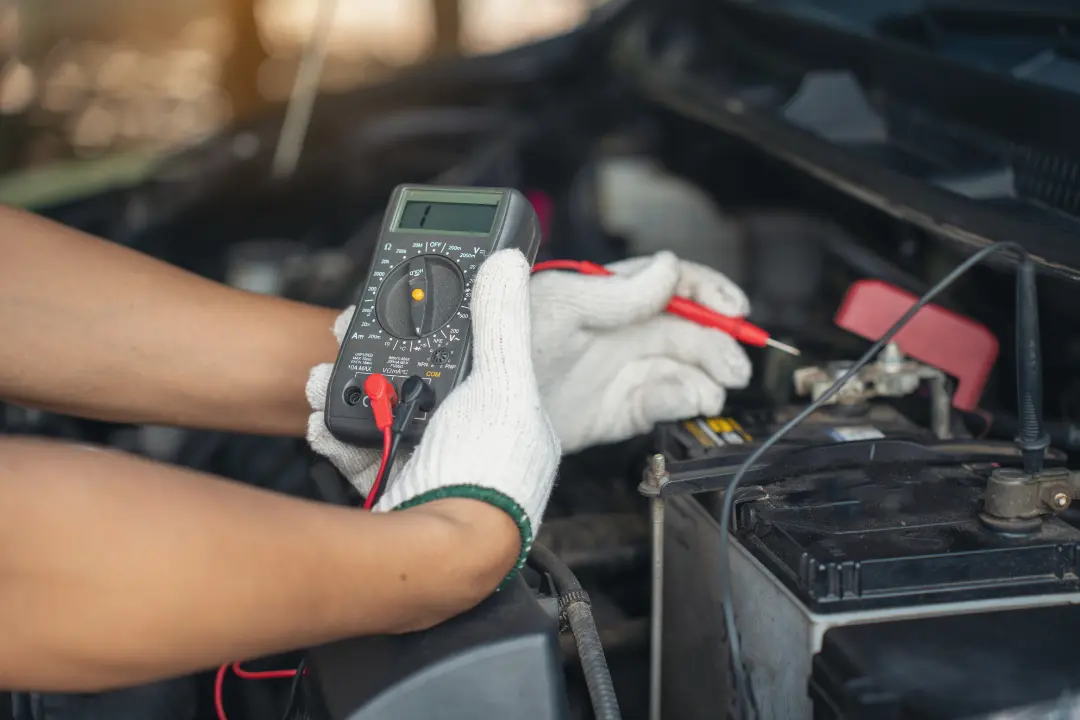
Technicians use a few practical checks to separate alternator faults from battery issues: measure resting voltage, perform a load/CCA test, and record alternator output under load. These steps help pinpoint whether the battery, alternator, or both need attention.
| Component | Failure Mode | Repair / Service Implication |
|---|---|---|
| Alternator | Overheating, diode or regulator failure | Rebuild or replace alternator; testing required |
| Engine Control Unit (ECU) | Corrupted data, resets due to voltage spikes | Software reflash or specialist repair; possible replacement |
| Fuse panel/wiring | Fuse replacement and wiring repair; trace the root cause |
Ways the Wrong Battery Damages the Alternator
A battery with poor charge acceptance or the wrong capacity can force the alternator into prolonged high-output cycles to maintain system voltage. That creates excess heat and accelerates wear on the voltage regulator and diodes.
Repeated heavy charging also increases load on bearings and brushes, which can lead to noisy operation and early failure. Technicians spot this pattern by measuring alternator voltage at different RPMs and checking for elevated charging temperatures or irregular waveforms. Timely testing helps prevent knock-on failures and keeps repairs more manageable.
Electrical System Components at Risk from Battery Mismatch
Sensitive systems, the ECU, vehicle communication networks, and sensors, are vulnerable to voltage spikes and unstable supply caused by the wrong battery chemistry or poor charging behaviour.
These parts can log error codes, lose calibration, or, in extreme cases, suffer data corruption that needs reprogramming or replacement. Wiring and fuse panels can face overcurrent and thermal damage when charging becomes uncontrolled or when poor fitment causes intermittent shorts.
A full diagnostic that checks voltage stability, load response, and network performance can identify affected systems before replacement becomes necessary.
Why Do Battery Voltage, Amperage, and Group Size Matter for Your Car?
Voltage, amperage (including CCA), and group size are the key compatibility details: they determine whether a battery fits correctly, delivers the starting current you need, and works safely with the charging system.
The wrong voltage won’t work; insufficient CCA strains the starter and alternator; the wrong group size leads to poor securing and terminal misalignment. Choosing the right combination supports reliable starts, stable charging, and better protection for the vehicle’s electronics.
| Battery Type / Attribute | Typical Value or Range | Compatibility Note |
|---|---|---|
| Nominal Voltage | 12V | Must match the vehicle’s electrical system |
| Cold Cranking Amps (CCA) | Varies by vehicle | Higher CCA for bigger engines and cold climates |
| Group Size (physical) | Size codes vary by make and model | Ensures correct tray fit and terminal layout |
Impact of Incorrect Voltage or Amperage on Your Vehicle
Even small voltage deviations can affect sensors and vehicle networks, causing false readings and dashboard warnings; sustained overvoltage shortens component life. Low amperage or inadequate CCA can lead to repeated slow starts and push the alternator to compensate, increasing thermal stress and failure risk.
Technicians measure voltage under load and compare the measured CCA to manufacturer recommendations to confirm whether the battery or charging system is at fault. Accurate matching helps prevent ongoing issues and supports reliable operation.
Battery Group Size and Its Importance
Group size describes a battery’s physical dimensions, terminal position, and fit specification. The correct group size ensures secure mounting and proper cable reach. The wrong size can let the battery move, rub cables, or place terminals too close to bodywork, which can cause shorts or accelerated corrosion.
A simple fit checklist confirms tray dimensions, terminal polarity, clearance, and clamp security; professionals cross-check group size with the vehicle spec to reduce mechanical and electrical risks. Proper fitment reduces vibration-related failures and supports a safe installation.
How Can All Vehicle Services Help Prevent and Fix Battery-Related Damage in Sittingbourne?
At All Vehicle Services in Sittingbourne, we offer local diagnostics, battery replacement, and electrical repairs, plus a FREE health check to spot mismatches and early damage before problems escalate. Our technicians run battery load tests, alternator charging checks, and electrical system scans to confirm whether the battery, alternator, or wiring is at fault.
We’ll recommend the correct battery type, CCA rating, and group size, fit it professionally with correct terminal orientation, dispose of the old battery responsibly, and help with any warranty queries. Call us to book an assessment or your free health check.
Locally, we provide battery testing, alternator and charging diagnostics, electrical fault finding, and correct-spec replacement with professional installation.
- Battery health check and load testing: verifies CCA and reserve capacity.
- Alternator and charging system diagnostics: measure output and regulator performance.
- Correct-spec replacement and secure fitting: ensures proper group size and terminal layout.
- Electrical fault finding and repair: addresses ECU, fuse panel, and wiring issues.
Local Battery Diagnostic and Replacement Services
During a diagnostic visit, we perform a resting voltage check, a battery load test, an alternator output measurement, and a charging system inspection so we fix the root cause, not just the symptom.
You’ll get clear results, a recommendation for the correct battery chemistry and CCA, and professional installation, including tray inspection and terminal cleaning. We’ll also share straightforward maintenance tips to help you spot issues early and reduce repeat problems.
Role of a Free Health Check in Preventing Wrong Battery Damage
Our FREE health check screens battery state of charge, CCA capability, and alternator output to catch mismatches or failing components before they affect the electrical system. We measure resting voltage, run a load test, and record alternator response under load, giving clear results on whether you need a battery replacement, alternator repair, or wiring fix.
Early detection reduces the risk of ECU or sensor issues. Book a free health check to confirm compatibility and keep your vehicle’s electrical system stable.
Frequently Asked Questions
What Are the Potential Long-Term Effects of Using the Wrong Battery?
Using the wrong battery can cause long-term damage to the alternator, ECU, and other sensitive electronics. Over time, mismatched voltage and amperage can increase heat and wear, which may lead to early component failure.
Repeated electrical stress can also cause erratic system behaviour and unplanned repairs. Regular diagnostics and timely battery replacement help reduce these risks and support a longer-lasting electrical system.
How Can I Identify If My Battery Is Overcharging?
Signs of overcharging include a swollen battery case, excessive heat, or a strong sulphur smell. You may also notice unusual electrical behaviour or the battery warning light on the dashboard.
A professional check that measures battery voltage under load can confirm overcharging if readings are above the manufacturer's specification. Addressing it quickly helps prevent further damage to the battery and connected components.
What Should I Do If My Battery Is Leaking?
If you find a leaking battery, act immediately and safely: wear gloves and eye protection, avoid touching the terminals, and disconnect the battery if it’s safe to do so. Neutralise acid spills with a baking soda and water solution, then clean up carefully. Contact a professional for correct disposal and replacement; leaking batteries can damage nearby wiring and components if left untreated.
Can a Faulty Alternator Mimic Battery Problems?
Yes. A failing alternator can produce symptoms similar to a weak battery, dimming lights, slow starts, and dashboard warnings. That’s why we test both the battery and alternator to identify the root cause and avoid unnecessary replacements. Accurate diagnosis keeps your vehicle reliable and helps prevent repeat issues.