Picking the right car battery means matching chemistry, size, and performance to your vehicle so it starts reliably and your radio, lights, and other accessories run smoothly. In this guide, we explain the main battery types, key specs like Cold Cranking Amps (CCA) and amp hours (Ah), common warning signs, basic testing steps, and typical replacement costs in the UK.
If you’re in Sittingbourne, Kent, we also explain the basics of fitment and the local service options for professional testing and fitting. Many drivers get stranded or shorten battery life by choosing the wrong chemistry for start-stop systems or heavy accessory use. This guide gives clear, practical steps and the red flags to watch for.
What Are the Different Types of Car Batteries and Their Benefits?
Batteries differ by chemistry and construction, and each type offers its own level of starting power, durability, and suitability for modern vehicle systems.
Knowing the differences helps you match a battery to your car’s start-stop system, electrical load, and budget so you avoid premature failure. Below is a quick comparison of the main types you’ll see when shopping for a replacement.
The table below summarises each battery type and where it works best to help you decide based on performance and how you use your car.
| Battery Type | Typical CCA / Ah | Best for |
|---|---|---|
| Lead-acid (flooded) | 300–600 CCA / 40–70 Ah | Older or economy cars with simple electrical systems |
| AGM (Absorbent Glass Mat) | 500–900 CCA / 50–90 Ah | Modern cars with high electrical demand and start‑stop systems |
| EFB (Enhanced Flooded Battery) | 450–700 CCA / 45–75 Ah | Cost‑effective option for mild start‑stop systems |
| Lithium-ion (LiFePO4) | 300–800 CCA equivalent / lower Ah | Lightweight or specialist applications; not suitable for every car |
AGM and EFB are both upgraded versions of flooded batteries, each designed for different vehicle needs. The sections below explain each type in straightforward terms so you can pick the right option for your car and driving style.
Lead-Acid Batteries and When to Use Them
A lead-acid (flooded) battery stores energy on lead plates immersed in electrolyte. It provides good starting power at a low cost, making it a sensible choice for older or budget cars without start-stop or heavy accessory loads.
Pros include affordability and widely available recycling options; cons include lower resistance to repeated deep discharges and shorter cycle life. If your car has basic electrics and you want the cheapest reliable replacement, a conventional lead-acid battery is still a practical option.
AGM and EFB Batteries for Modern Cars
AGM and EFB batteries are designed for today’s charging systems and start-stop technology, but they aren’t identical. AGM batteries use glass mats to hold the electrolyte, which helps them handle deeper cycling, resist vibration, and support heavy accessory loads, good for high-spec or heavily equipped cars.
EFB is a cheaper improvement over standard flooded units and suits milder start-stop systems. When choosing between them, check whether your vehicle’s start-stop system and electrical load justify the extra cost of AGM.
How Do I Choose the Right Car Battery for My Vehicle?
Choosing the correct battery means checking physical fit, matching the manufacturer’s group size, and confirming performance specs like CCA and Ah for your driving habits. Use the short checklist below to narrow options and avoid common mistakes that lead to early failure or fitment problems.
- Check your owner’s manual: Follow the manufacturer’s recommended group size and minimum CCA.
- Confirm physical fit: Make sure dimensions and terminal layout match your battery tray and cables.
- Compare CCA and Ah: Pick CCA for reliable cold starts and Ah for enough reserve when accessories run with the engine off.
- Consider driving patterns: Frequent short trips and cars with heavy audio or accessories usually benefit from higher reserve capacity or AGM/EFB.
This checklist keeps choosing a battery simple and quick for UK drivers. If you’d rather get confirmation for your specific model, we at All Vehicle Services can check fitment and run a free battery health test. Our technicians provide clear, no-obligation quotes and will recommend the right group size and chemistry for your car.
| Specification | What it affects | Practical guidance |
|---|---|---|
| CCA (Cold Cranking Amps) | Starting power in cold weather | Choose a higher CCA for cold conditions or diesel engines |
| Amp hours (Ah) | Reserve capacity for accessories | Pick a higher Ah for frequent short journeys or heavy electronics |
| Group Size / Dimensions | Physical fit and terminal layout | Match the exact group size and terminal orientation to avoid fitment issues |
Key Battery Specifications: CCA, Amp Hours, and Size
Cold Cranking Amps (CCA) measure the battery’s ability to start an engine in low temperatures. Amp hours (Ah) indicate how much reserve energy the battery holds for accessories when the engine is off.
Group size and terminal layout control fitment and safe installation; the wrong group can mean loose clamps or reversed terminals. If you live somewhere cold, prioritise CCA; if you use lots of electronics or do many short trips, favour higher Ah. Together, these specs ensure reliable performance for your car.
Impact of Driving Habits and Climate on Battery Choice
Short urban journeys and frequent accessory use without a full recharge wear batteries faster than long motorway trips that top the battery up. Start‑stop systems cause many shallow cycles, so AGM or EFB batteries usually last longer in those cars.
Cold weather increases the need for CCA to overcome thicker oil and tougher cranking; hot weather speeds internal corrosion and electrolyte loss. Match chemistry and capacity to how and where you drive for the best lifespan and reliability.
What Are the Signs That My Car Battery Needs Replacing?
Batteries usually give warning signs before they fail, and spotting these early lets you arrange a test or replacement before you’re stuck. Identifying battery issues early also helps avoid misdiagnosing alternator or starter faults. Common indicators that a battery is weakening are listed below.
- Slow engine crank: The starter turns over slowly when you try to start the car.
- Dimming lights: Headlights or dash lights grow noticeably dim while idling.
- Electrical glitches: Radios, sensors, or infotainment behave unpredictably.
- Warning lights or clicks: Battery/charging warning lamp on the dash or a clicking sound when you start points to low voltage.
Spotting these symptoms should prompt basic checks and, if needed, professional diagnostics to confirm whether the battery needs replacing. At All Vehicle Services, we offer diagnostic checks and replacement services to get you back on the road with a battery that suits your car.
Common Symptoms of a Failing Battery
A battery that’s starting to fail usually gives you a series of warning signs rather than stopping without notice. You might notice the engine turning over more slowly than normal, lights that look dimmer than usual, or electrical features like windows, wipers, or the blower fan feeling weaker than they used to. Dashboard warning lights may also appear, especially the battery symbol or a general charging system warning, and these often show up intermittently at first rather than staying on all the time.
Slow cranking is one of the clearest early symptoms of a weak battery. The engine may hesitate before it fires, or you may need to turn the key or press the start button more than once before it catches, particularly after the car has been standing overnight or in cold weather. In many cases, these slow starts become more frequent over a few days or weeks as the battery loses capacity, even though the voltage reading may still look normal on a basic meter.
Electrical issues that come and go are another common sign. Low battery voltage can cause lights to flicker or dim at idle, audio systems to cut out, and warning messages to appear briefly and then disappear as the voltage rises and falls. These problems often point to a tired battery or poor connections rather than a fault with each individual component, which is why a proper load test is more useful than relying on voltage alone.
A rapid clicking noise when you turn the key or press the start button usually means the battery doesn’t have enough strength to turn the starter motor. The solenoid is trying to engage, but there isn’t enough current available to crank the engine, so you just hear repeated clicks instead of the usual cranking sound. If this happens, the car may still power the dashboard and lights, but it’s a strong indication that the battery is very weak or the terminals/earth connections need attention, and you should arrange a battery test as soon as possible.
Testing Your Car Battery’s Health
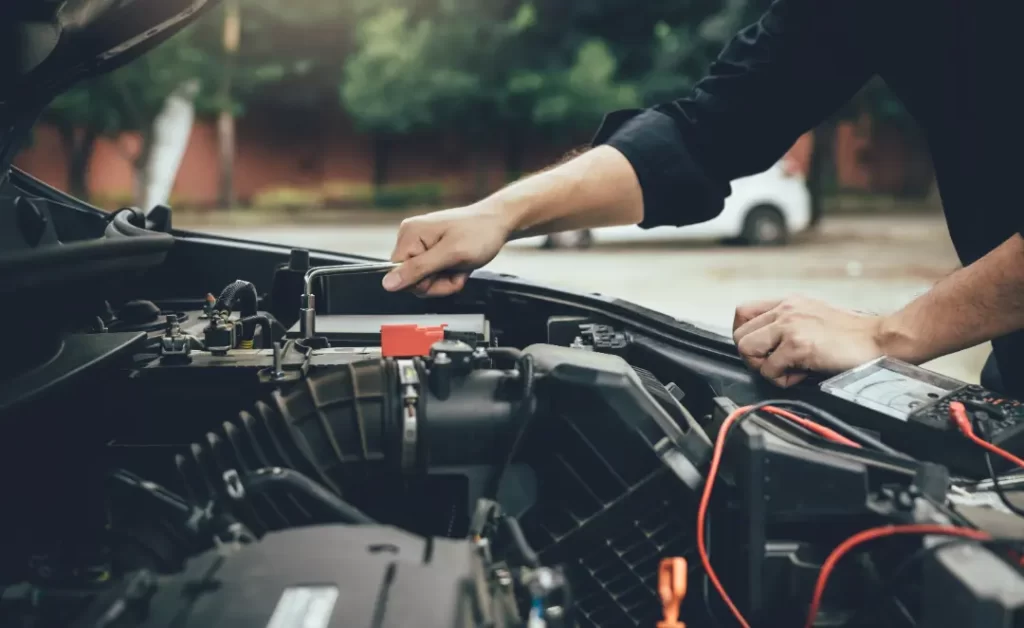
A simple multimeter check gives a quick snapshot: around 12.6V is a full charge, 12.2–12.4V is partially charged, and below 12.0V suggests the battery is weak and needs further testing.
For a clear diagnosis, a professional load test and alternator check will show how the battery performs under real conditions and whether the charging system is working properly. If you’re unsure, get a professional check. We provide free battery health checks and no-obligation quotes to confirm the condition and next steps.
What Are the Typical Costs and Services for Car Battery Replacement in the UK?
Replacement costs depend on battery chemistry, how easy the battery is to access, and any required programming for battery management systems. Standard lead‑acid batteries are the cheapest option, while AGM batteries cost more. Labour and any coding or access work can also add to the bill.
The table below gives a concise cost guide for UK drivers and examples relevant to Sittingbourne.
| Service / Battery Type | Typical UK cost range | Standard lead-acid battery fitting |
|---|---|---|
| Standard lead-acid battery fitting | £50–£120 | Local prices vary by fitment; ask about a free health check |
| EFB battery + fitment | £90–£160 | Good for many start‑stop cars; warranty length differs by brand |
| AGM battery + fitment | £120–£220 | Often required for modern vehicles with heavy electronics |
Battery Replacement Costs in Sittingbourne and the UK
UK prices depend on battery type and labour: standard replacements sit at the lower end, AGM fitments cost more due to a higher battery price and extra work. Additional charges may apply if coding is required or the battery is hard to reach (under seats or in the boot).
Local garages in Sittingbourne frequently offer free battery health checks, so you only replace a battery when it’s necessary.
Reasons to Choose All Vehicle Services for Professional Battery Replacement
All Vehicle Services is a local garage in Sittingbourne offering a full range of vehicle care, servicing, MOTs, air-con regas, exhausts, diagnostics, clutches, brakes, and battery replacement.
We aim to be the reliable, local option with fair pricing and experienced technicians. We provide free battery health checks, clear advice, and no-obligation quotes, and we’ll confirm the correct group size and chemistry before fitting a replacement so you get the right battery the first time.
Frequently Asked Questions
How Long Do Car Batteries Typically Last?
Most car batteries last around three to five years, depending on how you use the car, the local climate, and maintenance habits. Frequent short trips, extreme temperatures, and heavy electrical loads can shorten life. If your battery is close to three years old, watch for warning signs and consider a test.
Can I Replace My Car Battery Myself?
Yes, many owners can replace a battery if they have the right tools and follow safety steps. Check the vehicle manual for removal and installation instructions, and disconnect the negative terminal first. If you’re unsure, it’s safer to have a professional do the job.
What Should I Do If My Car Battery Is Dead?
Try a jump-start using jumper cables and another vehicle. If that doesn’t work, have the battery tested or replaced. Also, check for underlying faults like a failing alternator that could have caused the battery to fail. If you can’t resolve it yourself, call roadside assistance or a local garage.
Are There Eco-Friendly Options for Car Batteries?
Yes. Lithium-ion (LiFePO4) batteries are more efficient and often last longer than traditional lead-acid units, and many manufacturers now offer recycling programmes for used batteries. When choosing a battery, look for brands that offer recycling or environmentally responsible disposal.
How long do car batteries typically last?
Most car batteries last around three to five years, depending on mileage, driving pattern, and climate. Frequent short trips, lots of stop‑start driving, and cold winters can shorten battery life, so once a battery is over three years old it’s sensible to have it tested regularly.
Can I replace my car battery myself?
Some owners are comfortable changing a battery themselves, but modern vehicles often need the new battery coded or registered with the car’s electronics, and may lose settings if it’s done incorrectly. Having a garage handle the replacement means the correct battery is fitted, any coding is completed, and the old unit is disposed of safely.
What should I do if my car battery is completely flat?
If the car won’t start, you can try a jump‑start using jump leads and a suitable donor vehicle or a booster pack, following the safety steps in your handbook. If it still won’t start, or the battery goes flat again soon after, it’s best to have the battery and charging system tested by a garage to check whether the battery, alternator, or another fault is to blame.
Are car batteries recycled when you replace them?
Yes. Old car batteries are classed as hazardous waste and should always be recycled rather than thrown away. When we fit a new battery, we take care of the old unit for you and send it into the appropriate recycling stream, so it’s dealt with safely and responsibly.